Milk Day? Again?

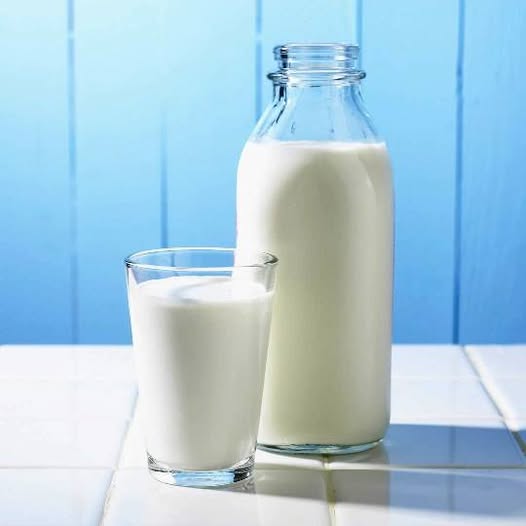
Today is World Milk Day – not to be confused with National Milk Day in the US. Actually a lot of countries have a national day devoted to milk but the FAO picked June 1 to bring everyone together on the assumption that no one would mind a second day spent talking ‘moo-juice’ (as my uncle Allen would say).

Of course, they also declared the last Wednesday in Sept each year to be World School Milk Day so it’s possible that the folks at the FAO have a TEENY milk obsession.


Sometimes I have to wonder about the Milk Lobby. Not only are there quite a few national milk days, milk is the official state beverage for more US states than any other beverage. And when I say more, I mean WAY more. Something happened in the world of milk in the 1980s…

Arkansas (1985), Delaware (1983), Kentucky (2005), Louisiana (1983), Maryland (1998), Minnesota (1984), Mississippi (1984), New York (1981), North Carolina (1987), North Dakota (1983), Oklahoma (2002), Oregon (1997), Pennsylvania (1982), South Carolina (1984), South Dakota (1986), Tennessee (2009), Vermont (1983), Virginia (1982), Wisconsin (1987)

Now, I’m not suggesting anything untoward but you know, I think if we examine the budgets of the ‘Got Milk’ people from the 1980s, we might well find a sizable amount under “sundries.”

But never mind that – Did you know that milk is one of the most commonly thrown away/wasted foods by households in developed world? Of the roughly 360,000 tonnes of waste milk that is poured down British drains each year, almost half of it is designated as “avoidable waste” – the result of too much being served. The rest is discarded for being sour or past its sell-by date.

Which reminds me – we’ll have a “sell by/best by date” discussion at some point as well because other than baby food, none of those days are regulated or consistently defined. Recipe for confusion!

So, what do you do if you are a small but busy household where the milk is only half used by the time you realize the date was a week ago and it’s smelling a bit odd? You either buy smaller containers of milk or you find a way to use more.

The latter does not mean you must drink an extra glass every day. In fact, most adults I know don’t drink glasses of milk at all. Most of the milk here at TransAtlantic Towers goes into coffee, baked goods or white sauces. Just use milk in additional ways. Make rice puddings, soups, poach some fish – make a panna cotta. And if the milk  has JUST “gone off” (like the day before) go ahead and use it if you’re gonna be baking. Works well in lots of biscuits, muffins and breads.

Or – just buy the smaller container.

The BLT: Why This “Simple” Sandwich Isn’t Simple at All

April is BLT Sandwich Month!

Now, I know what you’re thinking – a month to celebrate a BLT? How much time do you really need to celebrate a bacon, lettuce and tomato sandwich?

And I don’t disagree.

I could absolutely get behind a month dedicated to exploring the glories of bacon sandwiches – there are, after all, many kinds. But a BLT is just one of them. Do we really need four weeks to delve into the details of a BLT?

Well… having thought about it, we might.

Not because of some ancient pedigree. It’s not all that old – and probably more an evolution than an invention. It likely grew out of the tea sandwiches of the Victorian era – via the club sandwich – but really gained ground post–World War II, when fresh tomatoes and lettuce became available year-round.

The components needed for a typical BLT are: bacon, lettuce, tomato, mayonnaise and bread. But don’t let the simplicity of that list fool you.

This sandwich is a masterclass in culinary balance: the salt and crunch of the bacon, the acidity of the tomato, the cool crispness of the lettuce, and the creamy bridge of mayonnaise. Get that balance right and it’s perfect. Get it wrong and it’s… disappointing.

What makes a BLT a BLT

BLT lovers have strong views about every ingredient and every layer.

  • What bread is the right bread? Should it be toasted or not?
  • What is the right order of assembly?
  • Should the mayo go on both sides or only one?
  • Iceberg or romaine? Shredded or not?

Living in the UK as I do, I am also aware of heated discussions about which bacon puts the B in BLT – streaky bacon or back bacon? In the US, the bacon’s role is widely seen as bringing the crisp, so it’s streaky bacon all the way. We can get into the differences on Bacon Day – come back in September for that.

These are the sorts of things BLT obsessives debate. Hotly.

Poking the BLT Bear

Now, I am not one of those people who will stage a protest over the choice of lettuce, but I do enjoy the sheer spectacle of a foodie throwdown.

If you want to watch the sparks fly during BLT Month, try suggesting that if the tomato isn’t room temperature and lightly salted, the sandwich is a failure. Or wade in with an even bigger conversational grenade by asking, innocently, “Does it have to be white Pullman loaf? Can it be sourdough? What about… a bagel?”

What about “innovations”?

  • Do we consider the BLAT (a BLT with added avocado) a true BLT?
  • What about the BELT (a BLT that contains an egg)?
  • What about even more out-of-left-field suggestions like wrapping the whole thing in a tortilla or replacing the mayo with mashed peas? I think we all know TikTok has a lot to answer for when it comes to these “viral food hacks” that have very little to do with food and everything to do with clicks.

No, true BLT lovers will stick to the authentic, original blueprint – debated as it might be. We don’t need an algorithm to tell us that bacon, lettuce, and tomato work; we just need decent ingredients and a sharp knife.

Hmmmm. Maybe we do need a whole month after all.

Happy Nougat Day! And before you ask…

“Nougat? What is nougat, exactly?” I hear you cry.

It’s a good question but, like many good questions, it might be better never to have an answer. Isn’t it better to wonder what’s under the kilt or what the meaning of life is than to actually settle it once and for all? Don’t we all love a little mystery?

Sure we do – but not so much with our food. And if we are to be served nougat – much less be asked to celebrate it – I say we look into it and find out what makes it tick.*

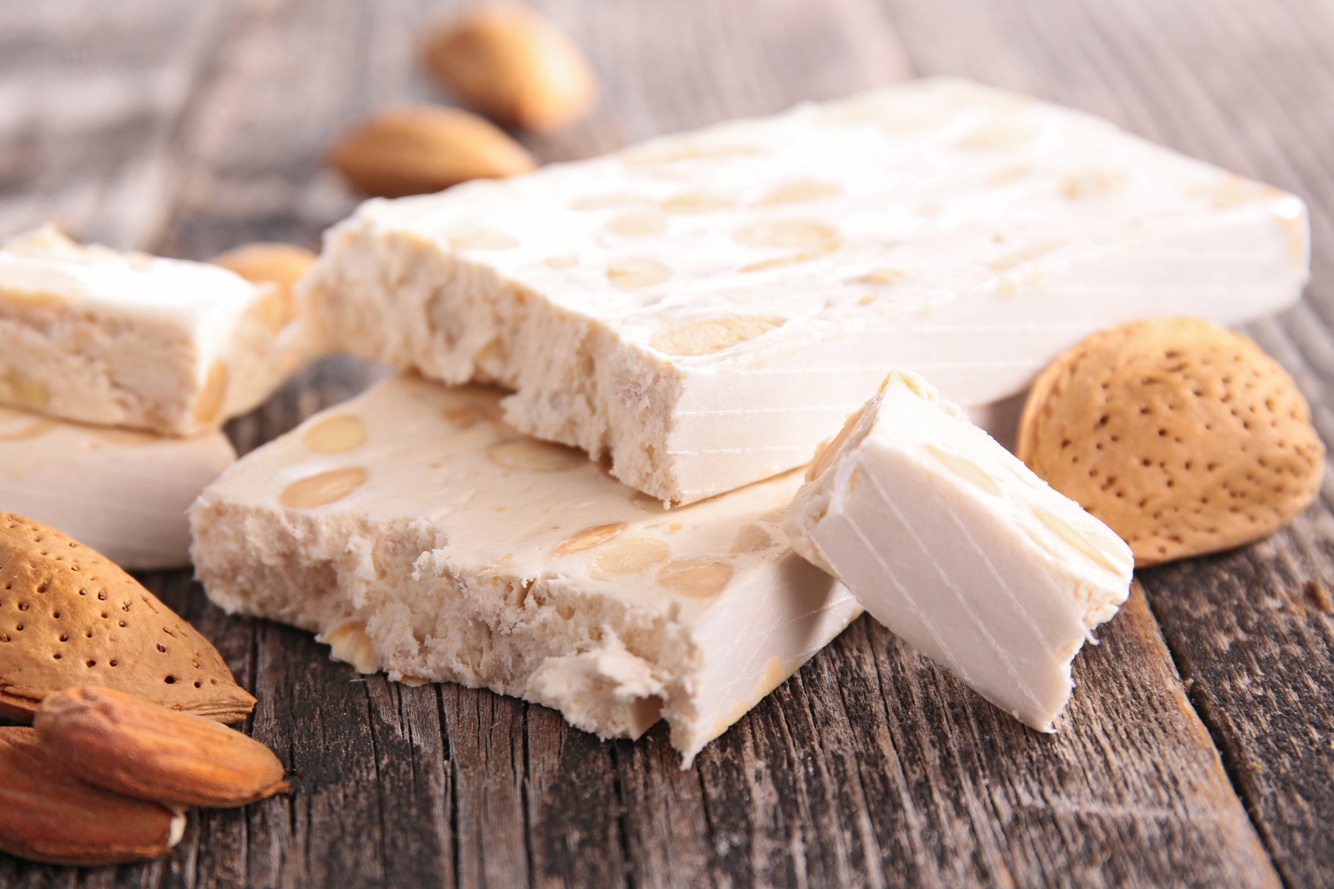
Nougat, according to Wikipedia (which is as good a starting point as any when one is poking around confectionery mysteries), “is a term used to describe a variety of similar confectioneries made with sugar or honey, roasted nuts and sometimes chopped candied fruit. The consistency of nougat can range from chewy to hard depending on its composition, and it is used in a variety of candy bars and chocolates.”

nougat

Given the vagueness of that definition, it won’t surprise you to hear that there are variations of nougat across many national culinary traditions. The Spanish have turrón, the French have their nougatine. There is gaz, a Persian variation, and even a couple of African versions – kurtzati and baxtiti – which lean more heavily into fruit than nuts. The Australians, unsurprisingly, go big on nuts, while the Germans, equally unsurprisingly, lean toward chocolate with something called Schmelz-Schokolade (literally “melted chocolate,” which feels like a very … German way to approach the situation).

All of which sounds delicious – but also not quite what I thought of as nougat.

And I’m not entirely convinced that the stuff inside Milky Ways, Snickers bars and 3 Musketeers bars (which is what I initially thought of) is quite as wholesome as the above makes it sound. Ah – and a quick glance further down the page confirms my suspicions. That version “is a mixture of sucrose and corn syrup aerated with a whipping agent such as egg white or hydrolyzed soya protein. It may also have vegetable fats and milk powder added.”

Yum?

Still, that helps. Nougat – in the proper (and dare I say edible) sense of the word – sounds like something worth celebrating. That other stuff sounds a lot like something you’d use to caulk your windows.


* Please note: This is just an expression of speech. If your nougat is ticking – it’s not nougat. It is a “device” and should not be eaten under any circumstances.

Kicking off 2026 A Bit Early

From a food observance perspective, December is all but over. Today is Bicarbonate of Soda Day ( a day too early considering tomorrow is New Year’s Eve but never mind.

So I’ve decided it’s time to focus on January. Besides, the weather is cold and January is one of the cosiest months on the foodie calendar.

January is …

Hot Tea Month: Yes, I know I’ve said I don’t like hot tea. I don’t like iced tea either. But that doesn’t mean I don’t appreciate that lots of other people enjoy the stuff. And I can also appreciate that it is a topic around which people have VIEWS. Views on which comes first, milk or tea; brew strength; bags vs. loose leaf… etc. I tend to stay quiet during these moments since no one wants to hear ‘Ewwwwww, just give me coffee.’

Slow Cooking Month: what could be more on brand for winter than slow cooking? Also, I am very much on board for anything that delivers far more comfort than the effort required. And since ‘simplicity’ seems to be on all the 2026 food trend lists, slow cookers will come into play there too. I mean, what could be easier than throwing a lot of stuff in the pot, turning it on and walking away for the day?

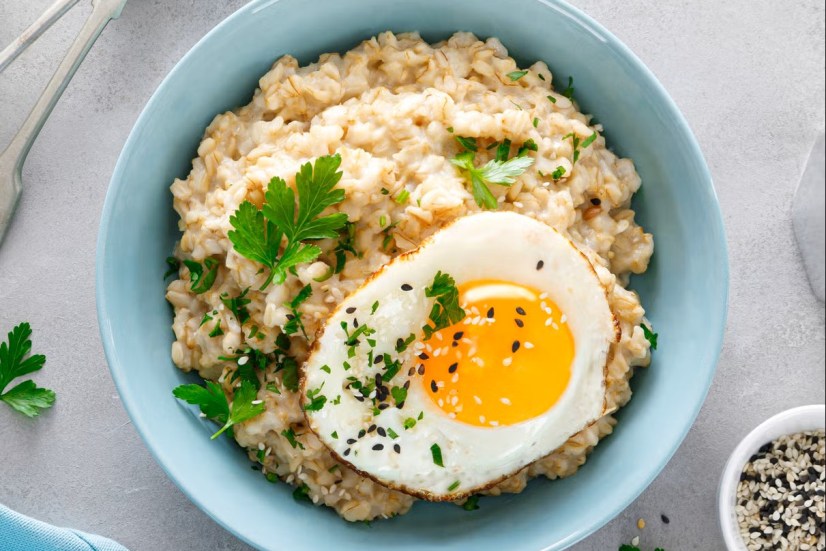
Oatmeal Month: When did oatmeal get so … varied? steel-cut oats, baked oatmeal, bowls gone savoury topped with eggs or greens are showing up all over the place. What is your favourite oatmeal topping? If you are an oatmeal person, have you tried savoury options?

Soup Month: OK, when I say what could be more on brand for winter than slow cooking, I should have said ‘well – soup.’ because it is also very on brand for winter. And so trendy – from bone broth to noodle bowls, soup shows up on all sorts of trend round ups – from gut health to batch cooking, from ‘how to hygge’ to reducing food waste. Bottom line: soup is good food. Enough said.

On the Occasion of Caviar Day

Today, so my research tells me, caviar day. Which kind? Whichever kind you like.

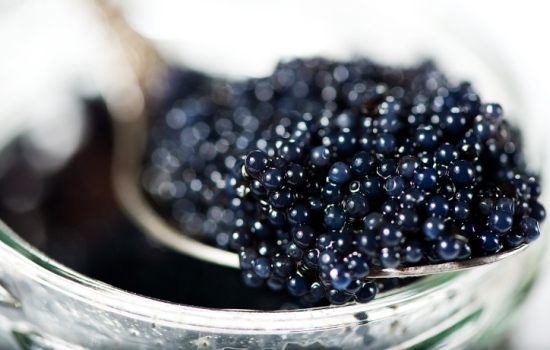
Black caviar is from sturgeon varieties – beluga, sturgeon and stellate sturgeon – and is not (as one might expect) always black. Sometimes it is grey (beluga), sometimes a quite a dark bronze-y shade (sturgeon) and finally deep inky black (stellate).
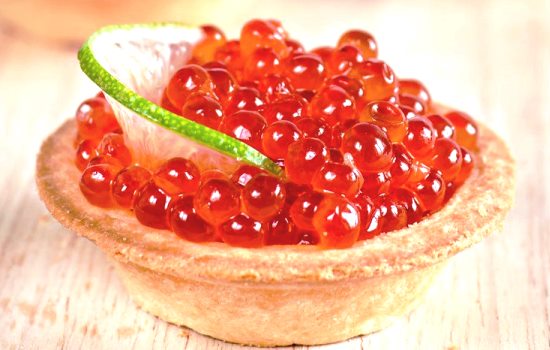
Red caviar comes from either on of variety of salmon or trout – keta (dog salmon) is apparently considered the best type of red caviar.

Though interesting in a sort of intellectual and Trivial Pursuit sense, all this this leaves me essentially unmoved to take any action since, I confess, I do not care for the stuff.  No, it’s not because I have not had good quality caviar. It’s not because I wasn’t given the right “garnishes.” I have tried it on three occasions – and at BEST, I was able to summon an internal “meh.”
Caviar didn’t always have the cache it does today. In fact, it was used as pig and animal feed until the end of the 18th century and when it first became a “thing” in America, they gave it away free in bars – like a small fishy version of today’s free peanuts that are supposed to make you a thirstier and more profitable customer. The pigs and bar flys are welcome to it – at least, they are welcome to my share.

But don’t let me stop you – my lack of interest in caviar just means more for you. So grab your topping of choice and your champagne or ice-cold vodka (I gather there is some debate about which is best choice for maximum caviar enjoyment) and enjoy. In fact, there were all sorts of articles in 2024 and the first half of 2025 talking about how caviar had gone mainstream and was cool once more. I admit, I didn’t notice – but hopefully the caviar lovers amongst you did.

I’ll be over here prepping for Ice Cream Day (July 19).


A post from the pre-blog-hack archives – originally posted 2016-07-18, with a few updates now . Thank goodness I backed these up, right?